To achieve higher crop productivity, farmers often use improved seeds, modern irrigation systems, and various fertilizers. However, the foundation of all these practices is soil health. Healthy soil is not just a medium for growing crops; it is a living and dynamic system that plays a crucial role in crop growth, nutrient availability, and overall crop quality.
In many regions today, excessive use of chemical fertilizers, declining organic matter, soil erosion, and continuous cultivation of the same crop have led to a decline in soil fertility. Therefore, maintaining and improving soil health has become essential for sustainable and profitable agriculture.
What Is Soil Health?
Soil health refers to the capacity of soil to provide an optimal environment for plant growth by supplying essential nutrients, water, air, and beneficial microorganisms.
Scientifically, soil health depends on three major components:
- Physical properties: Soil structure, texture, and water-holding capacity.
- Chemical properties: Soil pH, electrical conductivity (EC), and the balance of essential nutrients.
- Biological properties: The activity of beneficial microorganisms such as bacteria, fungi, and other soil organisms.
Why Is Soil Health Important?
1. Balanced Nutrient Availability
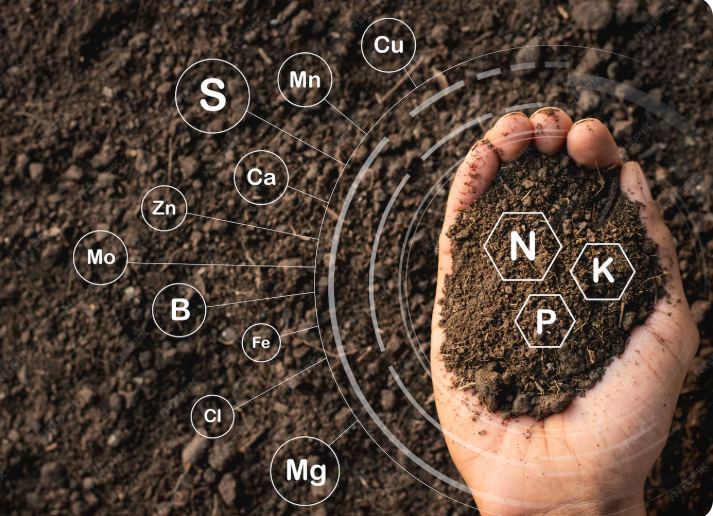
Healthy soil provides essential macronutrients such as nitrogen (N), phosphorus (P), and potassium (K), along with important micronutrients like zinc, boron, iron, magnesium, and manganese. Soil microorganisms help convert these nutrients into forms that plants can easily absorb.
2. Better Root Development
When soil structure is good, plant roots grow deeper and spread widely. Strong root systems improve the absorption of water and nutrients, which supports better plant growth.
3. Improved Water-Holding Capacity
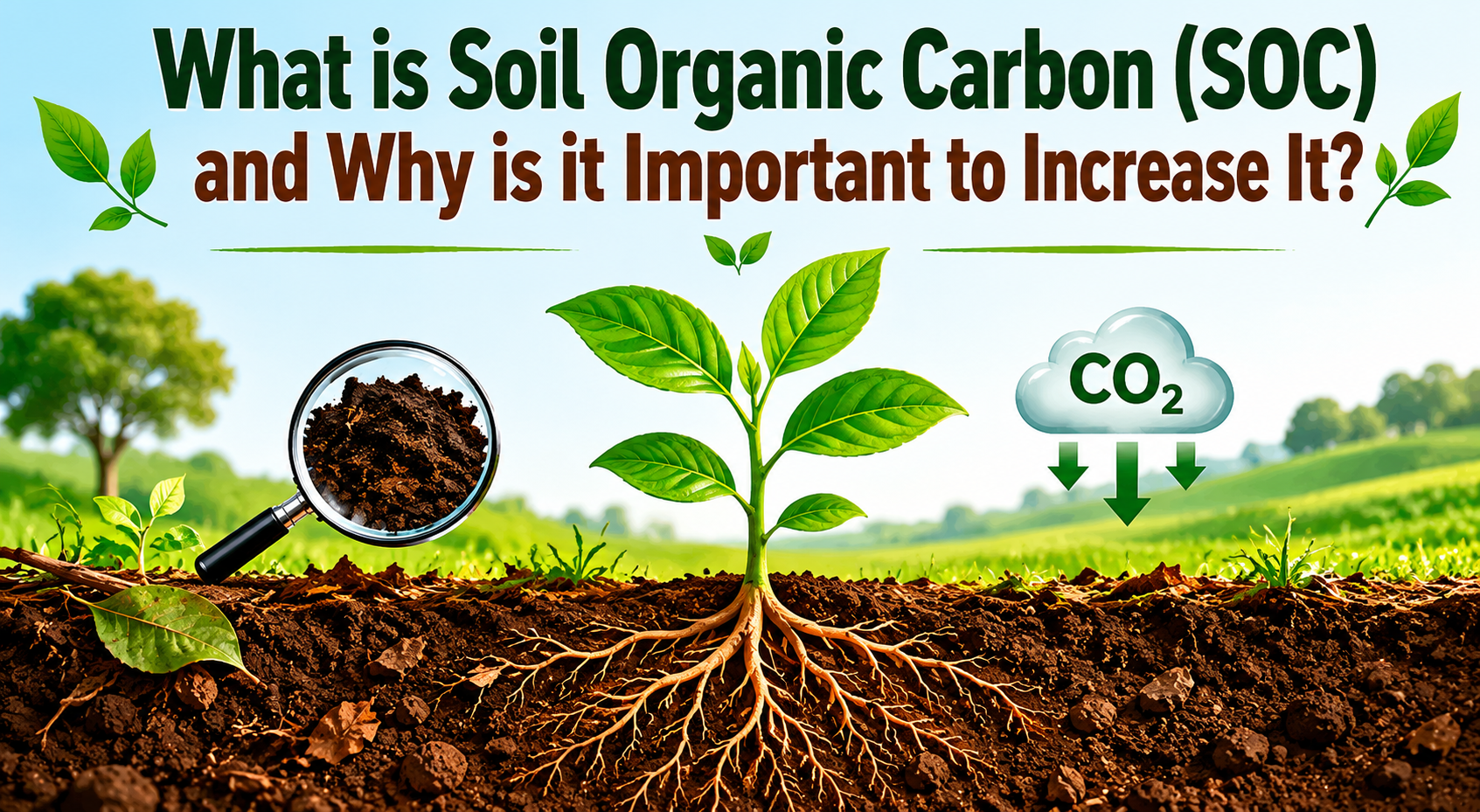
Soil organic carbon is a key indicator of soil health. When organic carbon levels are higher:
- Soil retains more moisture
- Irrigation efficiency improves
- Crops become more resilient during drought conditions
4. Increased Microbial Activity
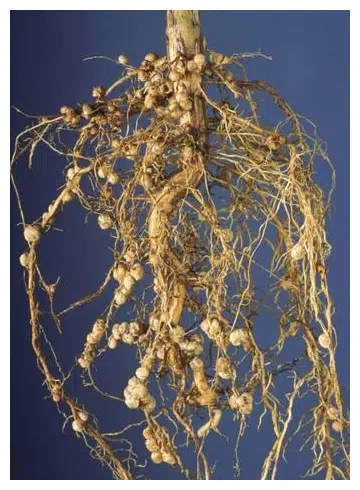
Healthy soil contains millions of beneficial microorganisms. These microbes play an important role in nutrient cycling, including nitrogen fixation, phosphorus solubilization, and decomposition of organic matter, which helps maintain soil fertility.
5. Improved Plant Resistance
Crops grown in healthy soil are generally more resistant to diseases and environmental stresses. As a result, pest and disease incidence can be reduced, and dependence on chemical pesticides may decrease.
Practices to Improve Soil Health
1. Regular Soil Testing
Soil testing helps determine the exact nutrient status of the soil, enabling farmers to apply fertilizers in the right quantity and balance.
2. Increase Organic Matter
Applying organic inputs such as farmyard manure, compost, vermicompost, and green manure improves soil structure and enhances microbial activity.
3. Crop Rotation
Continuous cultivation of a single crop can deplete specific nutrients. Practicing crop rotation helps maintain nutrient balance and improves soil fertility.
4. Use of Biofertilizers
Biofertilizers increase the population of beneficial microorganisms in the soil and improve nutrient availability to crops.
5. Balanced Fertilizer Management
Excessive use of chemical fertilizers can damage soil health. Therefore, scientific and balanced fertilizer management is essential for long-term soil productivity.
Soil health is the foundation of long-term agricultural success. Healthy soil provides crops with balanced nutrition, adequate water, and a favourable biological environment. This leads to better plant growth, higher yields, and more sustainable farming systems.
Therefore, farmers should adopt practices such as soil testing, application of organic matter, crop rotation, use of biofertilizers, and balanced fertilizer management to maintain and improve soil health. These practices ensure sustainable productivity and long-term profitability in agriculture. Bottom of Form
#SoilHealth #SustainableAgriculture #SmartFarming #CropProductivity #SoilManagement #AgriInnovation #FarmersFirst #OrganicFarming #Biofertilizers #AgriGrowth